
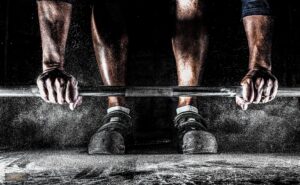
"If you're interested in living a long and healthy life and playing with your great-grandkids someday, then muscle mass should be a priority. Never in the history of human civilization has a 90-year-old said, 'I wish I had less muscle'". Peter Attia, MD - Author of Outlive - The Science and Art of Longevity
Understanding Sarcopenia: The Age-Related Muscle Loss You Can Fight
Seems obvious, right? Everyone wants to maintain their physical strength as long as they can. Without it, our ability to perform and enjoy the daily activities of living diminishes until we lose our independence - and nobody wants that.
Unfortunately, there's a villain waiting for all of us once we pass the age of 50. It's called sarcopenia, a condition that robs us of 5-10% of our muscle mass and strength every decade if left unchecked. A natural part of aging, it's caused by metabolic changes, decreased activity, inflammation, and hormonal shifts.
Sarcopenia Isn't Inevitable — Here's Proof
Science has proven that we don't have to passively surrender to this aspect of aging. It's wholly within our power to slow - and even reverse - the muscle loss brought on by sarcopenia.
In a remarkable landmark study performed by Maria Fiatarone MD, a group of adults in their 90s participated in three professionally supervised strength training sessions per week for 8 weeks. The results were nothing short of astonishing.
- Average strength increased by 174%
- Muscle mass increased by 9%
The test subjects were typical older adults living in a nursing home — battling weakness, immobility, balance issues, and fatigue. In just a few short weeks they were able to reverse a decade's worth of muscle loss.
Subsequent studies (several linked below) have consistently confirmed that strength training is a highly effective (and safe) intervention for older adults, mitigating age-related physical decline and improving overall quality of life.
You may believe that you're too old or too broken to change the trajectory of physical decline in your life with muscle strengthening exercises. But evidence says otherwise - and so does my lived experience.
My Own Battle With Sarcopenia
In February 2025 I underwent open heart surgery to repair an aortic aneurysm. The procedure is brutal: the sternum is sawed open, the heart exposed and repaired, then the breastbone wired back together. For the first month post-op I wasn't allowed to lift more than five pounds. Doctors recommend a full 12 weeks before resuming upper-body exercise.
The muscle loss was shocking. In just three months I dropped 20 pounds — most notably in my chest, shoulders, and arms. Sarcopenia saw an opening and barged through the door. I looked, and felt, like an old, frail 69-year-old man. But I was determined to test what the studies promised: that muscle can be rebuilt at any age.
In mid-May, 12 weeks post-op, I jumped back into lifting, eager to make up for lost time. Predictably, I overdid it, ended up sore and discouraged, and had to regroup. Fortunately, available studies on behavior modification provided some strategies for perseverance, and within a month I settled into a stable routine.
A Simple 3-Word Map to Recovery
Repeat after me: Consistency. Patience. Progression.
- Consistency: 4 days a week of structured resistance training. Even if only for 15 minutes. Adopting a non-negotiable schedule and sticking to it is the first step of habit formation.
- Patience: Starting at the lowest end of the scale. We're talking 3 pound dumbbells, 5 repetitions, 1 set. Cultivating the humility that allowed my body to steadily heal without further injury.
- Progression: Carefully listening to my body's feedback as I added sets, reps, and resistance. Gently pushing, while avoiding what I call the dread-line — a disheartening level of soreness that would make me recoil from the next session.
Following this framework, my body began to rapidly adapt. Remarkably, just 7 months post-op, I’m as strong as I’ve been in decades. I’m living proof that with proper coaching, nutrition, recovery — and above all, consistency, patience, and progression — late-life transformation is possible, even after major setbacks.
Where to Begin: Safe and Smart Strength Training
- Consult your physicians and healthcare providers. Get medical clearance, especially if you have pre-existing conditions or injuries.
- If you're recovering from surgery or injury of any kind, lean into physical therapy. Those folks can deliver unimaginable results - if you heed their advice.
- If you're not already in physical therapy, find the right guidance. Look for a physical therapist or certified personal trainer who specializes in senior fitness or functional aging. The right person will assess your current abilities and design a program tailored specifically for you — one that emphasizes safety, steady progress, and functional strength.
You're Not Too Old — Or Too Broken
I’m not special, but in February 2025 I was a most certainly a wreck - overwhelmed and discouraged. I know how dark those first weeks can feel. But I discovered that working consistently to regain and maintain muscle can also restore hope and confidence. Strength, even in small increments, can rewrite your story and reignite your passion for exploring the possibilities offered by this season of life.
With a proper approach, there's no downside to picking a fight with sarcopenia.
Get out there and kick its ass.
Additional Resources:
Live Active Successful Aging (LISA) Study - 2016
Meta Study on Effects of Resistance Training for Older Adults - 2024
How can strength training build healthier bodies as we age? - 2022